


Hard capsules have long played a pivotal and multi - faceted role in the pharmaceutical industry. As a dedicated hard capsules supplier, I've witnessed firsthand how these unassuming shells contribute to the success of countless pharmaceutical products. In this blog, I'll explore the various functions and importance of hard capsules in the pharmaceutical realm.
Protection of Active Ingredients
One of the primary roles of hard capsules is to protect the active pharmaceutical ingredients (APIs) from external factors. APIs can be highly sensitive to environmental conditions such as light, moisture, and oxygen. Exposure to these elements can lead to chemical degradation, which not only reduces the efficacy of the drug but may also produce potentially harmful by - products.
Hard capsules, typically made from gelatin or vegetarian alternatives like hydroxypropyl methylcellulose (HPMC), act as a physical barrier. Gelatin capsules, for example, have excellent moisture - resistant properties. They can prevent water molecules from reaching the API inside, thus maintaining the stability of moisture - sensitive drugs. On the other hand, HPMC capsules are ideal for light - sensitive drugs. They can block out ultraviolet and visible light to a certain extent, protecting the API from photodegradation.
Take Nature Made Turmeric Capsules as an example. Turmeric contains curcumin, a compound known for its antioxidant and anti - inflammatory properties. However, curcumin is highly unstable and prone to degradation when exposed to light and oxygen. The hard capsule provides a protective environment, ensuring that the curcumin remains intact until it reaches the target site in the body.
Masking of Taste and Odor
Many APIs have unpleasant tastes and odors, which can significantly affect patient compliance. Hard capsules offer an effective solution to this problem. By encapsulating the API, the taste and smell are masked, making the medication more palatable for patients.
This is particularly important for pediatric and geriatric patients, who may be more sensitive to bad tastes. For instance, some antibiotics have a bitter taste that can be difficult for children to tolerate. When formulated in hard capsules, the taste is hidden, and children are more likely to take the medication as prescribed.

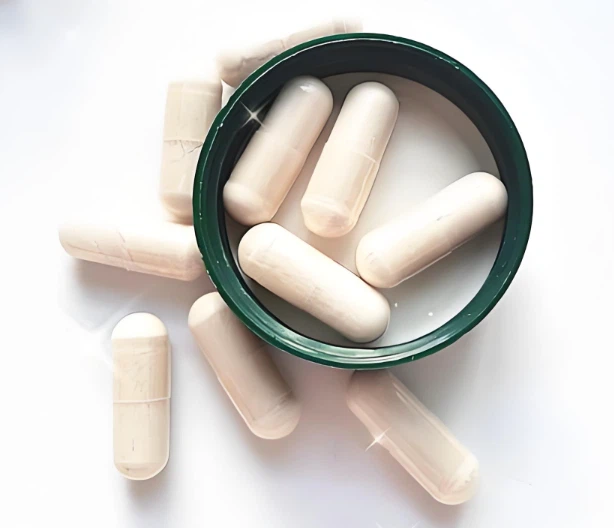
Hyaluronic Acid Capsules are another example. Hyaluronic acid itself has a rather unappealing taste. Encapsulating it in a hard capsule makes it easier for consumers to incorporate this beneficial supplement into their daily routine without being put off by the taste.
Accurate Dosage Delivery
Precise dosage is crucial in the pharmaceutical industry. Hard capsules allow for accurate measurement and delivery of APIs. The manufacturing process of hard capsules is highly standardized, which ensures that each capsule contains the exact amount of the API as specified in the formulation.
The uniformity of dosage is essential for the safety and efficacy of the drug. Whether it's a high - potency drug or a low - dose supplement, the hard capsule can deliver the correct amount of the active ingredient every time. For example, Magnesium Glycinate Complex Capsules need to provide a consistent amount of magnesium glycinate to achieve the desired health benefits. The hard capsule form ensures that consumers receive the right dosage with each intake.
Controlled Release of Drugs
In addition to protecting and delivering the API, hard capsules can also be designed for controlled release. This is achieved through various techniques, such as coating the capsule or using special capsule materials.
Controlled - release hard capsules can release the API at a predetermined rate over a specific period. This is beneficial for drugs that require a steady and continuous supply in the body. For example, some antihypertensive drugs need to maintain a constant blood concentration to effectively control blood pressure. A controlled - release hard capsule can gradually release the drug into the bloodstream, reducing the frequency of dosing and improving patient compliance.
Ease of Manufacturing and Packaging
From a manufacturing perspective, hard capsules are relatively easy to produce. The encapsulation process can be automated, which increases production efficiency and reduces costs. The capsules can be filled with a variety of APIs, including powders, granules, and pellets.
In terms of packaging, hard capsules are convenient to handle. They can be easily packed into blister packs or bottles, which provides additional protection during storage and transportation. The compact size of hard capsules also makes them suitable for mass - market distribution.
Compatibility with Different Formulations
Hard capsules are compatible with a wide range of API formulations. They can accommodate both hydrophilic and hydrophobic drugs. For hydrophilic drugs, the capsule shell can dissolve quickly in the gastrointestinal tract, releasing the drug for rapid absorption. For hydrophobic drugs, special techniques can be used to improve their solubility and dispersion within the capsule.
This versatility makes hard capsules a popular choice for pharmaceutical companies when developing new drugs or supplements. It allows for greater flexibility in formulation design and enables the delivery of different types of APIs in a single dosage form.
Conclusion
In conclusion, hard capsules play a vital role in the pharmaceutical industry. They protect the active ingredients, mask unpleasant tastes and odors, ensure accurate dosage delivery, enable controlled release of drugs, and offer ease of manufacturing and packaging. As a hard capsules supplier, I'm committed to providing high - quality capsules that meet the diverse needs of the pharmaceutical industry.
If you're in the pharmaceutical business and are looking for reliable hard capsules for your products, I encourage you to reach out for a procurement discussion. We have a wide range of capsule options, including different sizes, materials, and designs, to suit your specific requirements.
References
- Pharmaceutical Dosage Forms: Capsules, Second Edition, Edited by Raymond C. Rowe, Paul J. Sheskey, and Marian E. Quinn.
- Remington: The Science and Practice of Pharmacy, 22nd Edition, Edited by Patrick B. Troy.
- Journal of Pharmaceutical Sciences, various issues related to capsule technology and drug delivery.


