

Since 2002 from New Zealand, Hestia Biotech has been a global leader in the development, utilization and sourcing of marine biotechnology, nutraceuticals ingredients for the dietary supplement, and food and beverage industries.
-
![Bulk Astaxanthin Oil]() Bulk Astaxanthin OilAstaxanthin oil is a type of oil rich in astaxanthin, a keto carotenoid with strong antioxidant capacity. It is usually obtained from natural sources such as algae, shrimp, and crabs, or can be
Bulk Astaxanthin OilAstaxanthin oil is a type of oil rich in astaxanthin, a keto carotenoid with strong antioxidant capacity. It is usually obtained from natural sources such as algae, shrimp, and crabs, or can be -
![Natural Astaxanthin Powder]() Natural Astaxanthin PowderColor: Usually a deep red or purplish - red powder. This is because the conjugated double - bond structure of the astaxanthin molecule enables it to absorb light of specific wavelengths, thus
Natural Astaxanthin PowderColor: Usually a deep red or purplish - red powder. This is because the conjugated double - bond structure of the astaxanthin molecule enables it to absorb light of specific wavelengths, thus -
![Astaxanthin Microcapsule Powder]() Astaxanthin Microcapsule PowderRhodococcus pluvialis, also known as Rhodococcus lacustris or Haematococcus lacustris, is a common green algae belonging to the volvox order, Rhodococcus family. This algae is now known to exist
Astaxanthin Microcapsule PowderRhodococcus pluvialis, also known as Rhodococcus lacustris or Haematococcus lacustris, is a common green algae belonging to the volvox order, Rhodococcus family. This algae is now known to exist


Why Choose Us
Rich Experience
Based on pure natural marine ingredients, but not only on marine, Hestia had 10+ years OEM&ODM in supplying and exporting experiences in food supplement.
Our Certificate
Patented Production Technology and Advanced Equipment.ISO22000, HACCP, FSSC22000,GMP,FDA,FOS, GOED.
Our Service
Our provide the highest standard in the industry, complete customer satisfaction with prompt and accurate response to all inquiries, great customer service, reliable deliveries and extremely competitive rates.
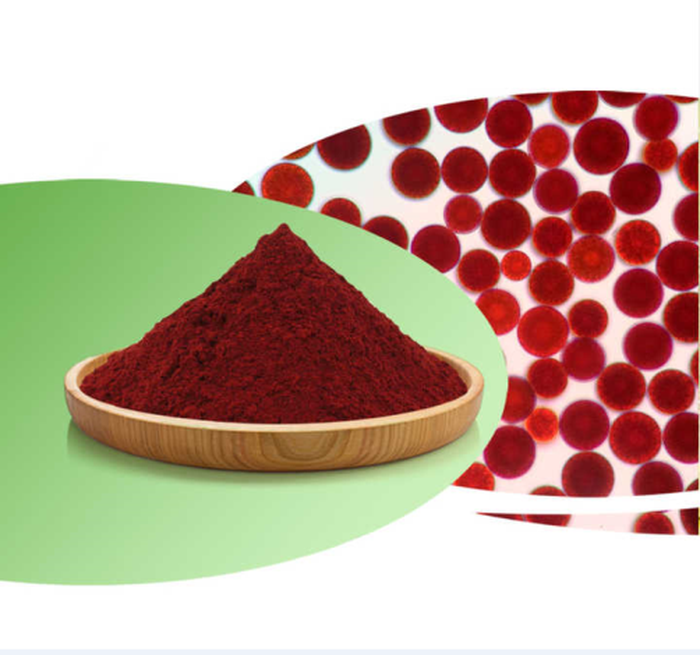
Astaxanthin is a red pigment that belongs to a group of chemicals called carotenoids. It occurs in certain algae and causes the pink-red color in salmon.Astaxanthin is an antioxidant. This effect might protect cells from damage. Astaxanthin might also improve the way the immune system functions.
Product Specification
We offer the following Product Specifications:
|
Appearance |
Dark Red Powder |
|
Source of Origin |
Haematococcus pluvialis |
|
Odor |
Characteristic |
|
Water soluble (CWS) powder |
1%, 2% |
|
Water dispersible (CWD) powder |
1%, 2%, 2.5%, 3% |
|
Lead |
≤1ppm |
|
Cadmium |
≤1ppm |
|
Mercury |
≤0.1ppm |
|
Arsenic |
≤1ppm |
|
Total plate count |
<1000cfu/g |
|
Yeast and molds |
<100cfu/g |
|
Salmonella |
NEGATIVE/10g |
Immune System Support
Astaxanthin can influence your immune system, helping to activate white blood cells (T-cells) and natural killer (NK) cells.
Reduction in Inflammation
Along with boosting your immune system, astaxanthin may also help to reduce inflammation. In particular, this pigment acts on reactive oxygen species to reduce proteins that can cause inflammatory diseases like celiac disease, rheumatoid arthritis, heart disease, and diabetes.
Protection from UV Skin Damage
Taking supplements or consuming foods rich in astaxanthin may also help to protect your skin from ultraviolet (UV) damage. Astaxanthin accumulates in the epidermis and dermis layers of your skin, helping to block UV penetration and reduce existing damage.
Support Cognitive Health
Carotenoids have a positive effect on the brain by reducing the risks for neurodegenerative diseases. Astaxanthin is a smaller molecule, which means it can cross the blood-brain barrier and add protection for your brain as well as your body's organs.
Healthy Heart Function
If you're trying to improve your heart health, you may have good results with astaxanthin. This carotenoid can help to reduce LDL or bad cholesterol and can raise HDL or good cholesterol, while also lowering high blood pressure.
Application of Astaxanthin
Food Grade
As the pigment powders.
Feed Grade
As the additives for the fish and other amimals.
Cosmetic Grade
For skincare, such as the cream, face mask.
Healthcare Products
Dietary supplement products.
Astaxanthin is a lipophilic compound and can be dissolved in solvents and oils. Solvents, acids, edible oils, microwave assisted and enzymatic methods are used for astaxanthin extraction. Astaxanthin is accumulated in encysted cells of Haematococcus. Astaxanthin in Haematococcus was extracted with different acid treatments, hydrochloric acid giving up to 80% recovery of the pigment . When encysted cells were treated with 40% acetone at 80 °C for 2 min followed by kitalase, cellulose, abalone and acetone powder, 70% recovery of astaxanthin was obtained.
High astaxanthin yield was observed with treatment of hydrochloric acid at various temperatures for 15 and 30 min using sonication . In another study, vegetable oils (soyabean, corn, olive and grape seed) were used to extract astaxanthin from Haematococcus. The culture was mixed with oils, and the astaxanthin inside the cell was extracted into the oils, with the highest recovery of 93% with olive oil . Astaxanthin (1.3 mg/g) was extracted from Phaffia rhodozyma under acid conditions. Microwave assisted extraction at 75 °C for 5 min resulted in 75% of astaxanthin; however, astaxanthin content was high in acetone extract.
Astaxanthin yield from Haematococcus was 80%–90% using supercritical fluid extraction with ethanol and sunflower oil as co-solvent. Astaxanthin was extracted repeatedly with solvents, pooled and evaporated by rotary evaporator, then re-dissolved in solvent and absorbance of extract was measured at 476–480 nm to estimate the astaxanthin content . Further the extract can be analyzed for quantification of astaxanthin using high pressure liquid chromatography and identified by mass spectra.

Precautions of Astaxanthin
Severe allergic reaction: Avoid astaxanthin if you have a known allergy to it or its ingredients or parts. If you need clarification on whether it's safe, ask a registered dietitian, pharmacist, or healthcare provider for more information.
Pregnancy: There is one study regarding the use of astaxanthin as a pretreatment to improve fertility treatment outcomes in people with endometriosis (a condition in which tissue similar to that lining the uterus grows outside the uterus).
Breastfeeding: There is limited information about the effects and safety of astaxanthin on breastfeeding parents and nursing babies. Moreover, most astaxanthin product labels are unlikely to target breastfeeding parents.7 Before using astaxanthin, discuss its benefits and risks with a healthcare provider.
Adults over age 65: Older adults have participated in astaxanthin-related clinical trials.2 Still, caution should be used with astaxanthin in older adults, since this population traditionally has a higher likelihood of medication side effects.
Children: There is little information about the impact and safety of astaxanthin in children. Furthermore, since astaxanthin product labels target adults and not infants or children, the supplement is likely not intended for this age group.7 Consult with a healthcare provider if you're considering astaxanthin for your child.
Animals: Too much astaxanthin may build up in the eyes and skin, causing the skin to look yellow or red.Before giving astaxanthin to animals, contact a veterinarian to discuss the benefits and risks.
Shipping

FAQ
As one of the leading astaxanthin manufacturers and suppliers in China, we warmly welcome you to buy high-grade astaxanthin for sale here from our factory. All our products are with high quality and competitive price.
Astaxanthin Microcapsule Powder, , Bulk Astaxanthin OilPopular Products


